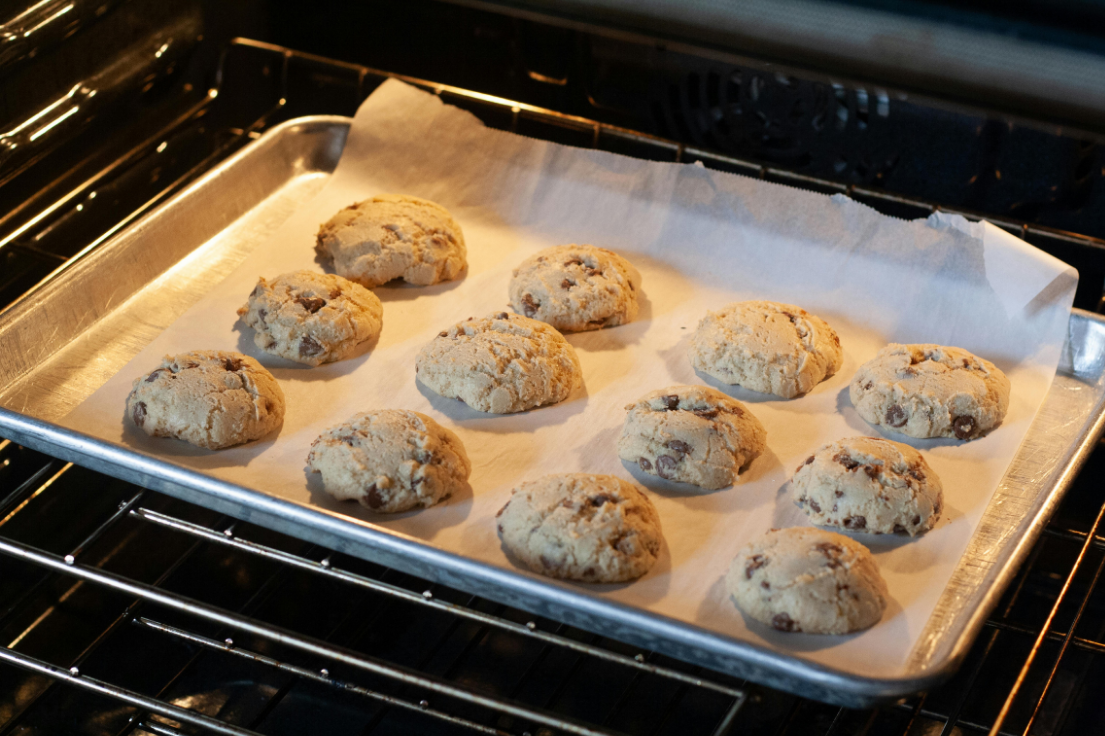
Mistakes in the kitchen rarely feel helpful in the moment.
Most of the time they show up as flat cakes, stubborn dough, or cookies that simply refuse to behave. But I’ve learned both slowly and repeatedly, that these small flops often reveal things I would never have noticed if everything had gone right the first time.
The German Baking Powder Flop
When I first moved to Germany, baking was one of the ways I tried to feel grounded. A warm kitchen, a familiar recipe, a small ritual on days when everything else felt new. Except… even the ingredients acted differently here. And my first real clue was the baking powder.
I assumed it would behave like the Canadian version I grew up with. Boy was I wrong.

My cakes rose too early and then sank back into themselves. Cookies stayed flat and confused. A series of baking fails…
I couldn’t figure out what was wrong until I finally looked closer at the label.
Canadian baking powder is typically double-acting: it bubbles once when mixed with liquid and again when the batter hits the heat of the oven. German baking powders are most often single-acting: they release all their leavening power the moment they meet moisture.
No second lift. No oven spring. No forgiveness for slow mixing or distracted moments.
Those baking “mistakes” now made perfect sense.
I hadn’t paid attention to this before… So many things are quite similar between Canada and Germany. Similar but different. The architecture, the cars, the traffic lights (if you have been to both counties you will know what I mean!). And this was another one of those “similar but different” situations. At a glance, they look the same, so without going deeper, it is easy to assume they are comparable. But once you look closer, the differences glare you in the face. This mistake of missing that detail became a teaching “aha!” moment.
The Chocolate Chip Cookie Fail
And then there was my favorite oatmeal chocolate chip cookie recipe, a recipe I’ve made since I was twelve (thank you home economics class!). I’ve made this recipe in every single place I’ve lived and it has always been a winner. But in Germany, the first tray would come out of the oven far flatter than they ever did in Canada, spreading into soft-edged puddles instead of holding their shape.

Lo and behold, the typical German flour has a lower protein content and absorbs moisture differently. While Canadian flour (as well as American) is classified by protein and gluten content, German flour is categorized by ash content.
This meant that finding a direct substitute was nearly impossible. This also meant that dough which felt perfect in Canada felt loose and under-structured in Bavaria.
What did I do? I stirred in a handful of extra flour and kept going. This extra flour compensated for the lack of protein and lower water absorption, restoring the balance. Another mistake turned mini-lesson.
The Colossal Cookie Crumble
It happened again recently with Vanillekipferl, the crescent-shaped Christmas cookies that fill every German bakery this time of year.
Two batches were on the To Do list: one with gluten, one gluten-free. The gluten batch came out beautifully. They were delicately crisp and lightly golden. Picture perfect little moon-shaped delights.

The gluten-free version baked perfectly too. They looked just as delicious as the gluten ones.
But sadly, looks are deceiving sometimes…The moment I tried to lift them from the tray to coat them in vanilla sugar, they disintegrated. Not into crumbs. Into powder. Soft, delicate mountains of dust.
Once again, the mistake held the explanation. Gluten-free dough often needs a little extra help: a bit more butter for binding, or xanthan gum to mimic gluten’s structure. Without enough of that scaffolding, the cookies simply couldn’t survive being moved. The structure was too fragile.

It would have been easy to call the batch a failure. But instead, I scooped up the cookie dust, mixed it into a quick batter, and baked muffins.
Not the plan. But surprisingly ok, all things considering.
The Quiet Beauty of Kitchen Mistakes
The beauty of such baking mistakes is that they’re rarely wasted.
They tell you:
- which assumptions you brought with you,
- which ingredients need a different approach,
- which structures hold and which crumble,
- and how a small difference can change the entire outcome.
Sometimes they even nudge you toward creativity you wouldn’t have reached otherwise. I never would have intentionally baked “Vanillekipferl muffins”. Now I would happily make them again.
These small episodes — a collapsing cake, a puddle cookie, a batch that turns to dust — remind me that the kitchen is a place of constant learning. A place where curiosity matters more than precision, where noticing is more important than perfection, and where the things that go “wrong” often point the way to understanding how things actually work.
Mistakes whisper: Look closer. Something interesting is happening here.
What kitchen flop taught you something unexpected, or perhaps turned into something better than you planned?
Leave a Reply