

Some kinds of “knowing” arrive slowly. They arrive through data, experience, and practice.
Others appear out of nowhere.
You notice something is “off” before you can explain it.
You reach for the right ingredient without measuring.
You wake up and somehow know it’s 06:48.
We call this intuition, but it’s not magic.
It’s pattern recognition. It’s the kind our brains run quietly in the background, long before the conscious mind catches up.
Intuition can be learned in all different contexts, from work, to home, and new countries.
Intuition isn’t mystical.
It’s deeply practical — and surprisingly scientific.
1. The Fermentation Tank I Forgot About (An Intuition Lesson in Panic Form)
Years ago, I was fermenting milk for an experiment during my studies and had a sudden, weird feeling that I hadn’t turned off the stirrer in the large fermentation tank.
There was no reason for the thought.
No calendar reminder.
No visual cue.
Just a feeling.
I drove back to the university and found… yes.
The stirrer was still running.
All night, it would have prevented the gel from forming properly, ruined the pH curve, and destroyed a whole three weeks of work.
People think intuition is mystical.
But really it’s this:
Your brain quietly noticing a pattern break — a tiny mismatch — and signaling you through discomfort.
People develop this at work without realizing it.
And honestly? It has saved more experiments than any standard operating procedure ever written.
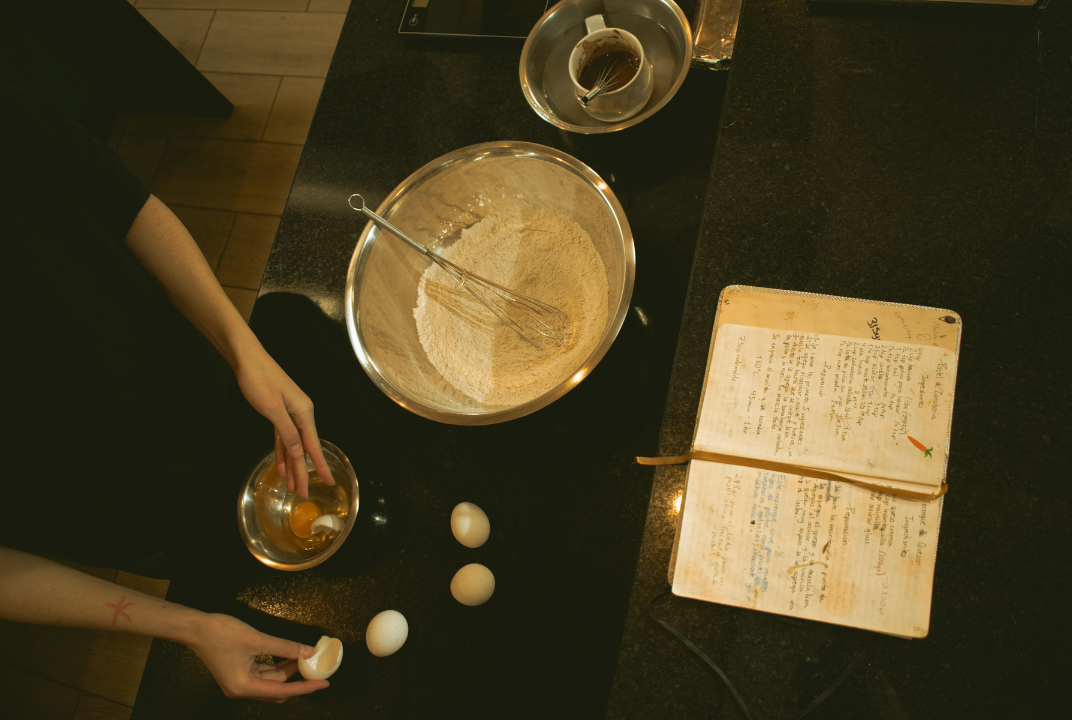
2. Eyeballing Butter and Fixing Flavors (Culinary Intuition Is Real Science)
Some people think intuition in the kitchen means being “artistic”.
But often it’s just embodied practice.

Like cutting butter by sight and being off by maybe a gram.
Like tasting a sauce and knowing instantly whether it needs lemon, soy sauce, cinnamon, or a pinch of salt, even before consciously registering the flavor imbalance.
Like just knowing when to stop whipping cream for the perfect texture.
This isn’t mystical talent.
It’s your brain storing thousands of sensory memories and comparing them faster than you can think.
Cooks, scientists, and musicians all build this kind of memory:
Repetition → Calibration → Intuition.
We don’t call it intuition in science. We call it experience.
But they’re the same thing.
3. The Strange Ability to Know the Time (The Most Universal Intuition of All)
One of the most human examples of intuition is also the simplest:
You wake up from a nap and just know it’s 16:30.
Or you look at the clock at exactly the moment your meeting reminder is about to ping.

Researchers think this comes from internal circadian calibration. From a blend of light cues, temperature rhythms, and background bodily signals we don’t consciously register.
Your brain is quietly stitching patterns together.
It’s not guessing.
It’s forecasting.
Just like fermentation.
Just like cooking.
Just like human relationships.
The patterns are always there.
You just notice them before you notice that you noticed them.
4. Navigating Life by Feel (Literal and Metaphorical)
Intuition also shows up in how we navigate everyday life, sometimes in surprisingly practical ways.
Ever taken a different walking route for no clear reason, and it ended up saving you from construction noise, icy sidewalks, or a traffic jam?
Or read a room in 2 seconds flat even if you didn’t consciously observe anything?

Science would call this “thin slicing”. This is your brain taking in a huge amount of micro-information and producing a fast, correct judgment before you consciously process the details.
Cross-cultural life amplifies this skill:
- Timing Intuition: “Just knowing” when to move, when to hurry, when the real start happens (anyone familiar with the “academic 15” in Germany, or the grocery store “checkout Olympics”?).
- Conversational Intuition: Where the length of a pause means something different in every culture, people learn and then eventually intuitively know when to speak up. For example, in Germany, a slightly longer pause is normal and often signals someone is thinking, not upset; whereas in Canada people tend to fill the longer pauses up.
- Tone-Shift Intuition: Small tone shifts mean different things in different culture. And with practice, reacting to these becomes intuitive as well.
Cultural intuition is one of those things you don’t realize you’re developing until you suddenly have it.
When I moved from Canada to Germany, I misread pauses in conversation all the time. I got frazzled every time my groceries came speeding at me like a fast video game.
But eventually, I started to react without thinking.
It’s still cultural learning — just the kind that settles into your nervous system until it feels like intuition.
Intuition becomes a social survival tool.
Not perfect, not mystical. Just adaptive.
5. Why Intuition Works (Real Science, Not Vibes)
Intuition is built on:
- Pattern Recognition: Your brain compares new information to extremely large libraries of stored patterns.
- Implicit Memory: Skills and knowledge you’ve repeated so often they’ve become automatic.
- Interoception: Your awareness of internal states, like your heartbeat, stomach tension, and breathing changes.
- Environmental Cue Processing: Light, sound, smell, timing — processed subconsciously.
Together, these create that feeling of “I don’t know why I know this, but I know this”.
It’s fast.
Accurate more often than not.
And crucial for scientific, personal, and everyday decision-making.
6. Trusting the Quiet Knowing
We tend to treat intuition as the opposite of logic.
But in practice, it’s more like the pre-step to logic. It’s a mental alert that says:

“Something is worth paying attention to.”
My most important decisions didn’t start with data or careful analysis.
They started with a feeling.
A pull.
A pause.
A subtle mental nudge.
Then the reasoning followed.
Intuition doesn’t replace thinking.
It directs it.
Maybe the real lesson is this:
Humans are pattern-recognizing creatures.
And the quiet signals, those small ones we might ignore, often carry more truth than we expect.
What’s a moment when your intuition was right long before your reasoning caught up? I’d love to hear





Leave a Reply