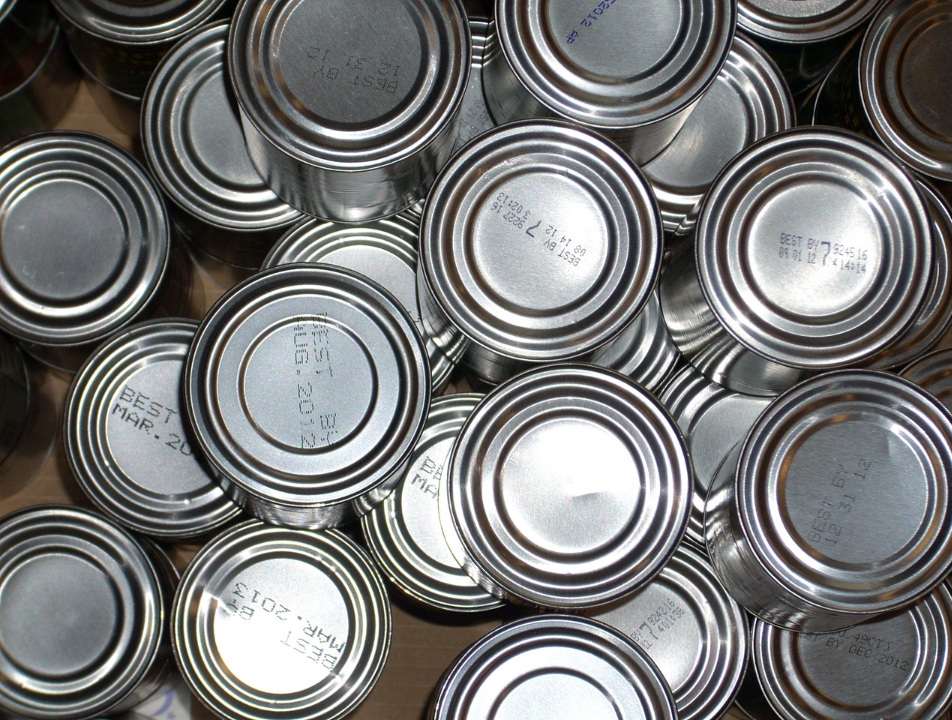
If you’ve been paying a bit more attention to your kitchen this year, you’ve probably started noticing things. Not just what you eat, but what’s been sitting there. You’ve sorted through the fridge, examined the dusty packages at the back of the cupboards, investigated those frosty containers in the freezer. And at some point, you probably ended up standing in front of something you were unsure about — turning it over, squinting at a faded date, and wondering what that date actually means.
Throwing food away doesn’t feel great. But neither does eating something you’re unsure about. That small moment of hesitation — Is this still okay to eat? — happens to everyone. It’s especially common at the start of the year, when people are thinking about starting fresh, cleaning, health, but also things like sustainability, and waste.
This is where expiration dates feel powerful. Whatever that label says, whether “expires on” or “best before”, these labels promise certainty. From a food science perspective, that promise is… complicated.
Most people treat these dates like prophecies.
“Best before December 6.”
As if something magical or catastrophic happens overnight on December 6. But these dates aren’t alarms. And they’re definitely not lab-verified countdowns to self-destruction.
They’re structured guidance, built to help, not to decide everything for us. This already tells us something interesting about why people like them so much.
In Short
– Expiration dates are structured guidance, not precise cutoffs.
– From a food science perspective, most dates are set well before food becomes unsafe, using controlled studies, buffers, and assumptions about real-world messiness.
– They work well at scale — but they don’t replace judgement in individual situations.
– The same tension between rules and context shows up far beyond the kitchen: in work, in decision-making, and in how we navigate uncertainty more generally.
A Quick Note On Terminology
Not all dates mean the same thing. Depending on where you live, you’ll usually see some combination of:
- “Best before” — about quality, not safety
- “Use by” — about safety and meant to be followed
- “Expiration date” — a broader term that’s often used imprecisely
Most confusion (and unnecessary food waste) happens when these get treated as interchangeable, even though they aren’t.
The terminology also varies by region. In the European Union, labels are more clearly defined between quality (“best before”) and safety (“use by”). In Canada and the USA, the underlying concepts are similar, but the language is more variable and most dates are intended to signal quality rather than safety.
Across systems though, the intent is the same: dates are guidance within a framework, not absolute truth independent of context.
What Those Dates On Food Are Actually Based On
Expiration dates come from controlled shelf-life studies. In practice, that means measuring things like:
- how quickly microbes could grow under defined conditions.
- when trained sensory panels agree that quality is declining.
- how fats oxidize over time.
- how light, oxygen, and packaging affect stability.
- how food responds to temperature changes.
All of this happens under controlled conditions: tidy labs, stable temperatures, constant humidity and so forth.
In other words: not your fridge.

Real life includes fridge doors that are opened too often, uneven cooling, and temperature “events” we prefer not to think about. To account for this, manufacturers build in buffers (often generous ones) to cover variability in storage, handling, and real-world messiness.
The final date isn’t chosen at the moment food becomes unsafe or unpleasant. It’s set earlier, at a point where quality is reliably acceptable across many imperfect conditions. These dates also serve regulatory, legal, and logistical purposes, standardizing expectations across long supply chains.
So are they useful? Yes.
Precise? Not really.
Omniscient? Definitely not.
Why People Often Still Treat Them Like Absolute Truth
Dates feel comforting because they’re clear. They offer a single moment where responsibility seems to transfer from us to the label.
Before the date: safe.
After the date: questionable.
That clarity is appealing, especially when judgement feels messy.
But food doesn’t actually work that way. And neither does decision-making.
Learning to Read Past the Label (Carefully)
Over time, many people learn to treat expiration dates as a starting point, not a verdict (for foods labelled for quality, not safety!).
Some foods make this easier than others, such as the examples detailed below:
Cheese
Most cheeses age by design. Lower-moisture cheeses limit microbial growth simply by limiting water, which microbes need to survive. Surface mould isn’t automatically a problem; what matters more are deeper spoilage signals: sour or ammonia-like smells, excessive sliminess, or structural breakdown.
Yogurt
Yogurt is already fermented. Its acidity and live cultures suppress the growth of many unwanted microbes, which is why it often remains acceptable beyond its “best before” date. Warning signs include strong off-odors, unusual gas formation, or visible molds (especially pink or orange), which indicate contamination rather than normal aging.
Honey
Honey has extremely low water activity, which means that microorganisms can’t grow in it. It doesn’t expire. It simply just waits.
Salt
Salt is a mineral and doesn’t expire. Clumping signals humidity, not decay.
Canned Goods
Commercially canned foods are heat-treated to destroy microbes. If the seal is intact and the can isn’t bulging, leaking, or rusted through, contents are usually safe well beyond the printed date. Once opened, of course, the rules change.
As a rough guide, foods tend to be more stable when they have one or more of the following:

- low moisture
- high acidity
- fermentation
- heat treatment combined with sealed packaging
Foods without these protections, especially fresh, high-moisture, protein-rich foods, are far less forgiving and are where dates matter most.
Food is always communicating. Sometimes subtly and sometimes very clearly.
A smell that fills your nose in milliseconds. A texture a bit too fuzzy to be true.
Learning to notice those signals takes practice which, as we know, is how judgement develops.
A Brief Food Safety Note
This discussion applies mainly to foods labelled for quality. Foods with “use by” dates, infant formula, and highly perishable products should be treated differently. Those dates exist for safety reasons and should be followed. When in doubt, especially for vulnerable populations, caution beats curiosity. Here the saying applies: when in doubt, throw it out.
What This Has to Do With Life Outside the Fridge
Expiration dates work because they provide structure. But structure alone is never the full story.
The same pattern shows up at work.

In organizations, metrics, KPIs, and dashboards function a lot like expiration dates. They’re designed to create consistency across complex systems, using assumptions, averages, and built-in buffers. They’re incredibly useful, but they cannot capture the complete reality.
A metric can still be “green” while something underneath is starting to veer off.
A project can technically be on track while momentum, trust, or clarity is quietly declining.
Good judgement at work isn’t about ignoring the numbers. It’s about knowing when to treat them as guidance, and also when to look more closely at what’s actually happening on the ground.
The same dynamic shows up personally as well, especially in the early months of the year, when people tend to make promises to themselves.

We often treat goals and timelines as hard cutoffs: by this date, I should be different.
As if change happens all at once, or failure suddenly becomes true the moment a date passes.
But life, like food, rarely changes overnight. It shifts gradually. Progress and decay both tend to happen quietly, long before there’s an obvious “expired” moment.
Learning to notice those shifts, without needing a label to tell us, is part of how judgement develops. We often call this intuition, which can be described as patterns noticed, mistakes corrected, and signals learned over time. I recently wrote about this in a post called Intuition: The Hidden Science Behind Our Gut Feelings and How it Shows up in Daily Life.
Structure, Judgement, and the Overlap
From a scientific perspective, most systems are probabilistic, not precise. Shelf life, like organizational metrics or personal timelines, is about managing risk — not eliminating it.
Expiration dates sit between:
- science and uncertainty
- guidance and context
- rules and reality
Used well, they support judgement. And the same is true far beyond the kitchen.
In food systems, dates help scale decisions across millions of products and imperfect conditions.
In organizations, metrics and frameworks help coordinate work across teams and time zones.
In personal life, timelines help us make sense of change.
None of these tools are wrong.
They’re just incomplete without paying attention to context.
So What Does This Mean?
Expiration dates aren’t to be thrown away, but they shouldn’t be treated as final verdicts either.
They remind us that certainty is usually not guaranteed. And that good decisions live in the space between structure and observation.
We do better when we read what’s in front of us — the smell, the texture, the subtle signals of change — not instead of the label, but alongside it.
Judgement isn’t about ignoring guidance.
It’s about knowing when to lean on it and when to look a little closer.
Food For Thought
Where in your life are you following the label — the rules, metrics, timelines — and where might it be time to check more of the context?
Leave a Reply